



















Golan Rotenberg · Meet the Team

21 named roles.One human point of view.

I'm Golan Rotenberg. The roles on this page support my research, writing and the work around them. Each has a specific brief, a place in the workflow and a clear boundary. I remain responsible for the work I put into the world.

My work sits where literature review, research method and the responsible use of AI meet. This page introduces the team that supports it, the way it is organized and, just as importantly, the point at which its authority ends.

Each portrait represents a role in my workflow, from AI readers to Clio, the library's deterministic catalogue. Important outputs still need human review.

Why a team

A name gives a job a face.

Argus reads. Solon keeps the criteria explicit. Veritas asks what the numbers support. Nabu keeps the record.

Giving these jobs names makes the work easier to follow: which assistant is handling a question, what information it has, what it is expected to produce, and where the next decision belongs. Some roles support the research method. Others support coordination, language, public writing or voice access.

The characters help me recognize the roles. Their boundaries help me use them responsibly.

The scholarly frame

Scholarship as a division of labor.

A literature review is often described as a summary of what is known. In practice it is closer to a chain of judgments: a question is framed, a search is designed, thousands of records are read, criteria are applied, disagreements are resolved, and the whole procedure is reported so that another scholar could follow it. Every link in that chain is a place where an error can enter, and a place where a safeguard can be built.

The reporting traditions of evidence synthesis, PRISMA 2020 and the Cochrane Handbook among them, answer with a handful of habits: explicit criteria fixed in advance, independent reading by more than one reviewer, a defined route for disagreement, documentation of every step, and honesty about what the evidence cannot show. The team on this page is an attempt to make those habits visible, and easy to inspect, one role at a time.

Naming the roles is a methodological choice, not a theatrical one. Of any output, a reader can ask: which role produced it, what was it given to read, what was it kept from seeing, and who made the decision that followed?

Five scholarly commitments

01

Independent readings

Two readers who cannot see each other's answers produce information that one reader alone cannot. Argus and Ganesha read separately; Themis arrives without knowing what either said.

02

Criteria fixed in advance

A review can be repeated only if its rules are written down and versioned. A change needs a reason, a visible route and the approval of people.

03

Provenance

Every recovered text keeps its origin and the date it was retrieved. Where no source can be found, the gap is recorded rather than filled.

04

Uncertainty as a result

A record may be held for people to decide, and an audit states bounds rather than reassurance. Not knowing is a legitimate output, provided it is reported.

05

Human accountability

Naming an assistant assigns work. It does not transfer responsibility, which stays with the people who stand behind the review and the words.

Applies to all roles

From question to report

The roster follows the life of a research project. Here is where each role enters, and what it contributes at that stage.

  1. 01

    Framing the question

    A review begins with a question and a protocol. Smart helps a rough question take shape and maps unfamiliar ground; Gregory turns the settled design into a documented method and checks it against what the team is actually doing.

  2. 02

    Locating the sources

    Older records often arrive without abstracts. Mnemosyne recovers the published text from public sources, accepts only exact identifiers, and attaches every find to its origin.

  3. 03

    Screening

    Two separate readings of every title and abstract, each citing the text behind its call, and a fresh third reading for the records that remain unsettled.

  4. 04

    Screening the full text

    After title and abstract screening, Iris locates the full text. Portunus, Mimir and Clio prepare a single usable copy. Ariadne and Kastor read it independently, with Odin available for disagreements. Tyr combines the recommendations, then Thoth checks the quotations. Ma'at audits a sample and Hesiod prepares the report.

  5. 05

    Governing the criteria

    The criteria are versioned. When a documented error exposes a flaw, Solon drafts the amendment and lists the earlier results it would affect; people approve it.

  6. 06

    Auditing the exclusions

    A random sample of excluded records is re-read by humans. Veritas turns the sample into statistical bounds and says plainly what the audit does and does not settle.

  7. 07

    Keeping the record

    Versions, batches, costs, anomalies and corrections go into an append-only log, so that the path to any result can be reconstructed and questioned.

  8. 08

    Writing and presenting

    Boaz protects the author's meaning in English; Avshalom shapes a public draft that waits for explicit approval; Shofar lets the team be heard and spoken to when hands are busy.

These commitments echo the language of reporting standards familiar to reviewers. They describe how the roles are meant to be used; they are not a claim of compliance or certification.

The roster

The team

Twenty-one illustrated roles in five groups. Select any portrait to open the profile and read where the role stops.

The Review Department

Seven roles around one careful process.

Separate jobs for reading records, recovering missing source text, maintaining criteria, checking the audit and preserving the history. Recommendations move through this process; the responsible human reviewers make the review decisions.

Argus, a man with dark curls and silver temples in a long charcoal coat, examining a small card through a monocle

Review recommendation

ארגוס

Screening Agent A

“Point to the evidence.”

A first, independent reading of each record's title and abstract against the agreed criteria, with the evidence quoted.

Where it stopsProposes; does not decide inclusion. Never sees Ganesha's reading.

Ganesha, a dignified elephant-headed figure in a long deep-aubergine coat, holding an ivory dossier and raising an open hand

Review recommendation

גנש

Screening Agent B

“Leave room for uncertainty.”

A second, separate reading of the same records, with room to say that the text does not support a confident call.

Where it stopsDoes not see Argus's reading, change the criteria, or guess when uncertain.

Themis, a tall woman with a dark braid and a pale blindfold, in a charcoal cape-coat over wide trousers, holding a jade folio

Review recommendation

תמיס

Third Opinion

“A fresh reading, before a final call.”

A fresh reading for records the first two readers could not settle, written as advice for the human reviewers.

Where it stopsNever receives the earlier verdicts. Advises; does not decide.

Solon, a figure built of layered basalt with thin bronze seams, in a stone overcoat, holding a pale rulebook block and a small terracotta tile

Research process support

סולון

Rule Steward

“Make the rule clear. Make the change visible.”

Keeper of the written criteria. It proposes precise changes, records every approved version and never applies its own proposal.

Where it stopsProposes only. Changes need two named human approvals.

Veritas, a woman with close white curls in a blue waistcoat and wide trousers, examining a small sphere in a brass caliper

Research process support

וריטס

Audit Statistics and Verification

“What does the evidence let us claim?”

Asks what the evidence lets us claim. It audits excluded records statistically and states the limits of the process.

Where it stopsDoes not label individual articles. Reports unfavorable findings plainly.

Mnemosyne, a woman woven from moss-green and ivory filaments, holding an original abstract sheet linked to her hand by a copper strand

Research process support

מנמוסינה

Abstract Recovery and Source Records

“Find the original. Keep its trail.”

Recovers missing abstracts from public scholarly sources and keeps each one tied to its origin.

Where it stopsNever writes or reconstructs an abstract. Unresolved records go to people.

Nabu, a bearded man in an ink-black high-collared long jacket and terracotta trousers, writing in a clay-colored ledger with a brass stylus

Research process support

נבו

Scribe and Record Keeper

“Leave a record worth returning to.”

Keeps the append-only record of the work: versions, batches, costs, anomalies and corrections.

Where it stopsAdds to the record; never edits, deletes or omits earlier entries.

The Review Department — Full-Text Stage

Read the whole article. Keep the evidence in view.

The team's full-text stage picks up after title and abstract screening. It traces each article from retrieval and file checks through independent readings, audit and bilingual reporting. The stage is built and has passed initial checks. Its first screening run is still ahead.

Iris, Dark-haired messenger in an indigo coat with a leather satchel and manuscript folio

Source retrieval

איריס

Full-Text Acquisition Agent

“Every source has a door.”

Follows each article through publishers, repositories and archives until the full text is in hand or the search is exhausted.

Where it stopsRetrieves and logs sources. The reading and screening belong to other roles.

Portunus, Silver-haired gatekeeper in an oxblood coat carrying a document case and a bronze key ring

Document integrity

פורטונוס

File Integrity Agent

“Nothing unread enters.”

Checks whether each retrieved file opens, yields readable text and matches the article on record.

Where it stopsChecks the file and its match to the record. The study's merit is outside his remit.

Mimir, Silver-bearded archivist in a sage wool vest examining a leather-bound volume

Record linkage

מימיר

Deduplication Agent

“Once is enough.”

Recognizes when two sources delivered the same article and links their copies to one canonical file.

Where it stopsLinks verified copies of the same article. Similarity alone leaves records separate.

Clio, Stone librarian in an ink-blue coat holding a wooden catalogue box with ivory cards

Library catalogue · deterministic code

קליאו

Full-Text Librarian

“Hashed, dated, findable.”

Catalogues each file and gives each reader its assigned article, with a record of completed readings.

Where it stopsRuns a fixed catalogue and assignment procedure. The readers interpret the article.

Ariadne, Reader with braided chestnut hair in a green coat holding a manuscript marked with red thread

Screening recommendation

אריאדנה

Full-Text Reader A

“Follow the thread to the end.”

Follows the complete article from aims to findings and anchors her recommendation to the relevant pages.

Where it stopsReads independently of Kastor and recommends a screening outcome for review.

Kastor, Dark-haired reader in a navy wool coat with silver fastenings, carrying a slate-blue manuscript

Screening recommendation

קאסטור

Full-Text Reader B

“The same standard, a different light.”

Reads the same full article against the same criteria, independently of Ariadne.

Where it stopsForms his own recommendation. A disagreement has a separate route to Odin.

Odin, One-eyed scholar with a gray beard and a dark traveling coat, holding a worn red folio

Independent third reading

אודין

Deep Reader

“Depth is the price.”

Gives an unsettled article a third, deeper reading without seeing the earlier recommendations.

Where it stopsReturns the final machine recommendation. Human reviewers retain the decision.

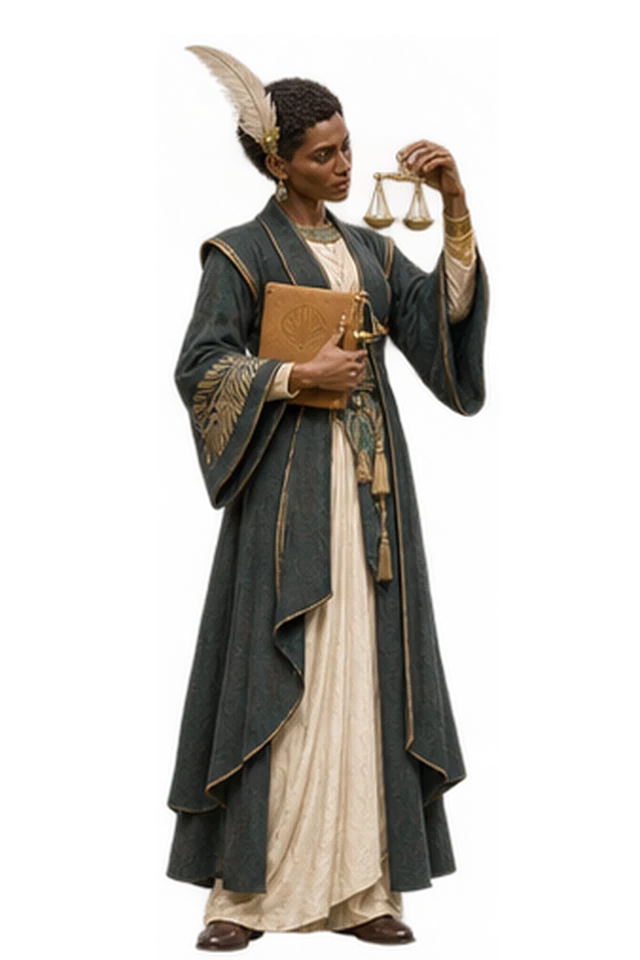
Ma'at, Egyptian auditor in a dark teal coat with a pale feather and a small brass balance

Audit and evidence

מאעת

Full-Text Auditor

“The feather does not bend.”

Re-reads a random sample of decisions against the original articles and reports what the evidence supports.

Where it stopsFlags findings for me. The recorded decisions stay as they are during the audit.

Hesiod, Gray-bearded scribe in a russet and charcoal coat presenting an open report

Reporting and documentation

הסיודוס

Bilingual Reporting Scribe

“The telling never outruns the evidence.”

Turns the recorded outputs of the full-text stage into workbooks and bilingual reports, with gaps shown plainly.

Where it stopsCompiles, translates and formats the record within the bounds of the evidence.

Coordination and Research Support

The wider view, and the next useful step.

Gregory connects the larger job. Smart helps the small questions take shape. Both work within the responsibilities and permissions assigned to them.

Gregory, an owl-headed figure in a waistcoat and graphite trousers, holding a terracotta folio

Coordination and methods

גרגורי

Chief Agent: Coordination, Methods and Documentation

“Keep the whole job in view.”

The main interface to the team. It holds the research workflow together, from the design of a review to the documentation that records it.

Where it stopsDoes not decide review content, publish, or message in Golan's name.

Smart, a figure braided from broad graphite ribbons around a warm ochre core, holding a small folded white guide

General research support

סמארט

Personal Research Aide

“Get the next small thing moving.”

A broad personal research aide for the small questions between larger commitments: first searches, quick explanations, rough drafts.

Where it stopsHands rigorous work to a specialist; conclusions still need human review.

Writing and Expression

Clear language, with my meaning intact.

Boaz works close to the English sentence. Avshalom helps shape a thought for a public audience. These are writing-support roles. I review the words and choose what I am willing to say.

Boaz, an older man with silver close-cropped locs, a navy shirt and a terracotta scarf, editing a draft with a pencil in hand

Writing support

בועז

English-Language Assistant

“Make the English clearer. Keep the voice.”

An English-language assistant close to the sentence: small, deliberate edits that keep the author's meaning, emphasis and certainty.

Where it stopsEdits minimally; never sends correspondence without explicit approval.

Avshalom, a man with wavy salt-and-pepper hair and tortoiseshell glasses, in a plum overshirt and apricot scarf, holding a handbuilt terracotta maquette over a draft page

Writing support

אבשלום

Professional Content and Positioning

“Find the thought. Give it a public shape.”

Shapes professional writing and public positioning through research, drafting, a voice check and a check of factual claims.

Where it stopsEvery public post needs Golan's explicit, manual approval.

Voice Access

A way to reach the work.

Shofar carries spoken instructions and reads responses aloud. This is an interface role; authority remains with the underlying role and its human reviewer.

Shofar, a bald man with silver stubble in a charcoal asymmetrical jacket with a brass collar, cupping one hand to his ear

Voice interface support

שופר

Voice Interface

“Give the work a voice.”

The voice interface. It carries spoken instructions to the other roles and reads their responses aloud.

Where it stopsNever acts without an explicit instruction; approval rules still apply.

The workflow

Follow one record

A recommendation has a history.

Consider a research record that arrives with an incomplete abstract. Its route through the team makes the division of work visible. Select a step to see who contributes.

Mnemosyne

Mnemosyne searches public sources and accepts matches only on exact identifiers.

Human reviewers decide

Gregory helps coordinate the method and its documentation. These are different kinds of work, with different information and authority. Their handoffs should make the human decision easier to inspect.

Working rules

The house rules

The useful part is knowing where the authority sits.

  1. 01

    A recommendation needs something to point to.

    For screening, the quoted justification must appear word for word in the supplied text. That check can confirm the quotation is present. People still need to judge whether the interpretation makes sense.

  2. 02

    Separate readings need separate inputs.

    The screening brief keeps earlier recommendations, human decisions and material outside the supplied record out of the screeners' view. Separation gives each reading space to form its own recommendation; shared mistakes remain possible.

  3. 03

    Changes need a visible route.

    Screening uses a recorded version of the criteria. A proposed change needs a reason, the required human approvals and a clear account of which earlier results must be revisited. Approved lessons can be carried into the relevant instructions and knowledge records.

  4. 04

    Consequential actions need authorization.

    Sending messages, publishing, deleting or contacting people in my name requires explicit approval. Each role also has its own narrower limits.

  5. 05

    People remain answerable for the outcome.

    I am responsible for my public words, choices and actions. In research, the human reviewers responsible for the project make and stand behind its decisions. Naming an assistant helps assign the work; it does not transfer accountability to the name.

Questions

Questions about the team

Are these actual members of staff?

These are named roles in my workflow. Most are carried out by AI assistants. Clio, the librarian, is deterministic code. The portraits give each role a recognizable visual form, and the profiles describe its responsibilities and working rules.

Has the full-text stage started screening?

The roles and code are in place and have passed initial checks. Their first screening run is still ahead. The profiles describe the assigned work.

Why use different assistants for different jobs?

Different tasks need different briefs, inputs and checks. A screener should read the supplied record under fixed criteria. An abstract-recovery assistant needs to search for a missing source. A writing assistant needs to preserve my meaning. Distinct roles make those expectations easier to see and question.

Does a separate reading guarantee a different answer?

No. It means one reader is not shown another's recommendation. AI systems can still share blind spots and make the same mistake. This is why the workflow also needs human judgment, review of excluded records and checks suited to each task.

Can the assistants act in Golan's name?

Their assigned responsibilities have limits. Sending, publishing, deleting or contacting someone in my name requires explicit approval. A draft or recommendation gives me something concrete to review before an action is taken.

Do they learn from a correction?

An approved lesson can be added to the relevant instructions and knowledge records. A change to the screening criteria must also follow the rulebook's approval process. Keeping the lesson visible can improve the next task, although it cannot guarantee that a mistake will never recur.

Why these names?

Some were chosen for their associations with watchfulness, memory, justice or expression. Others are practical and deliberately ordinary. The names help me remember the jobs. The working briefs define what each assistant is supposed to do.

How should I read these profiles?

They describe the roles and operating rules I have assigned. They are not performance guarantees. Actual behavior depends on the task, the tools and access available, and the setup in use. Important outputs require checking, and a valid quotation or correctly formatted answer can still lead to a mistaken recommendation.

The portraits illustrate team roles. The example tasks show the kind of work assigned to each role and were written for this page.

Have a question for the human?

If you'd like to talk about the research, the way this team is organized, or a possible collaboration, get in touch with me.

The assistants help prepare the work. I'm here to discuss it.